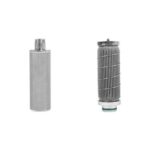

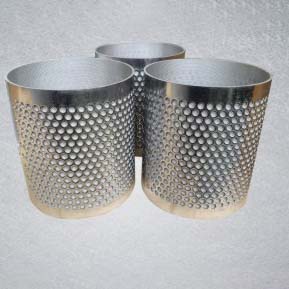
The Perforated Plate Composite Sintered Mesh Filter is produced with perforated metal plate (support layer) with laminate (filtration layer) sintered together, integrating the mechanical strength of the perforated plate and the high precision of sintered mesh.
This design makes it ideal for high-pressure, high-viscosity, and high-contaminant environments or for systems requiring exceptional structural integrity.
It is widely used across multiple industries, including oil & gas, metallurgy, water treatment, pharmaceuticals, and power generation.
1. Oil & Gas Industry
The oil & gas sector is one of the core application areas for Perforated Plate Composite Sintered Mesh Filters, valued for their pressure resistance, corrosion protection, and impact durability.
Drilling & Extraction:
- Drilling Fluid Filtration: Removes rock cuttings and sand (5–50 μm precision) to protect pumps and drilling tools.
- Wellhead Filtration: Filters out formation debris and metal particles in crude oil, protecting valves and flowmeters.
Refining & Transport:
- Crude Oil & Fuel Filtration: Removes impurities and rust from crude or refined oil pipelines.
- Lubricant & Hydraulic Oil Filtration: Eliminates metallic and oxidized contaminants (10–20 μm), extending equipment life.
Natural Gas Processing:
- Pre-Dehydration and Desulfurization Filtration: Removes dust and condensate droplets to prevent molecular sieve poisoning and blockage.
2.Metallurgy & Metal Processing
Designed for high-temperature and abrasive media such as molten metals or rolling oils, these filters deliver stability under extreme conditions.
Steelmaking:
- Cooling Water Filtration: Removes oxide scales and sand (20–50 μm) to prevent clogging and improve casting quality.
- Rolling Oil Filtration: Captures metal shavings and iron oxide to prevent surface scratches and extend oil life.
Non-Ferrous Metals:
- Molten Aluminum Filtration: Filters alumina inclusions (10–30 μm) to improve mechanical strength of aluminum alloys.
- Cutting Fluid Filtration: Removes fine metal powders (5–15 μm) in lathes and milling systems.
3.Water Treatment & Environmental Protection
Used for industrial wastewater treatment, cooling water filtration, and seawater desalination, the filter’s high dirt-holding capacity and cleanability make it cost-effective for continuous operation.
Industrial Circulating Water:
- Removes sludge, rust, and biofilm (30–100 μm) to protect heat exchangers and cooling systems.
Wastewater Pretreatment:
- Filters suspended solids (50–200 μm) before biological or membrane treatment, reducing downstream load.
Special Water Treatment:
- Seawater Desalination: Filters sand, algae, and shell fragments (20–50 μm) before RO membranes.
- Mine Water Recycling: Filters coal or metal particles for reuse in underground cooling or dust suppression.
4.Pharmaceutical & Food Industry
Made from 316L stainless steel, these filters meet FDA and GMP standards, ensuring hygiene and zero contamination.
Pharmaceuticals:
- Liquid Filtration: Removes raw material impurities and microorganisms (1–5 μm).
- Sterile Air Filtration: Ensures aseptic conditions in fermenters and lyophilizers (0.5–1 μm).
Food Processing:
- Juice & Beer Filtration: Removes pulp, yeast, and protein flocs (5–10 μm).
- Edible Oil Filtration: Filters press residues and gels for clarity and purity.
- Process Water Filtration: Ensures clean water for dairy and beverage production.
5.Power & Energy Industry
Essential for thermal, nuclear, and renewable energy systems where high pressure and temperature stability are required.
Thermal Power Plants:
- Boiler Feedwater Filtration: Removes suspended solids (10–20 μm) to prevent scaling and corrosion.
- Turbine Oil Filtration: Removes metallic debris and oxidized impurities (5–10 μm).
Renewable Energy:
- Wind Power Gearbox Oil Filtration: Filters wear particles (10–15 μm) to extend gearbox life.
- Solar Inverter Cooling Filtration: Keeps cooling water clean to maintain heat dissipation.
Conclusion
The Perforated Plate Composite Sintered Mesh Filter is engineered to meet the dual demands of strength and precision, offering long-term performance under high pressure, temperature, and contamination.
It supports a wide range of liquid and gas media—from water, oil, and chemicals to air and natural gas—with customizable filtration precision (1–200 μm).
Washable and reusable, it stands as an ideal high-strength precision filtration solution for modern industry.